
Flow Optimizer Vaned Elbows and Spools
Flow Optimizer vaned elbows and spools are designed to condition flow approaching a pump. Turning vanes guide liquid through a suction elbow, while a vaned spool conditions flow within a straight pipe section. Selection depends on the complete suction-piping arrangement and operating conditions.
When suction-piping conditions need attention
An elbow close to the pump suction can create uneven velocity distribution, flow separation or rotational flow. These conditions may contribute to noise, vibration or reduced hydraulic performance. They should be reviewed alongside other possible mechanical and hydraulic causes.
Guide the flow through the bend
Properly designed turning vanes can help manage flow through the elbow before it reaches the pump suction nozzle. Vane geometry and placement should be evaluated with the pump, upstream piping, operating range and available suction head.
For an existing clean-water installation, a grated elbow insert may offer another approach to evaluate. Compare the two below.
TWO APPROACHES TO SUCTION FLOW CONDITIONING
Vaned elbow or grated elbow insert?
A vaned elbow guides flow through the turn. A grated insert provides a retrofit approach to evaluate when an existing suction elbow will remain in service. The appropriate choice depends on the pump, piping geometry, operating flow and suction conditions.
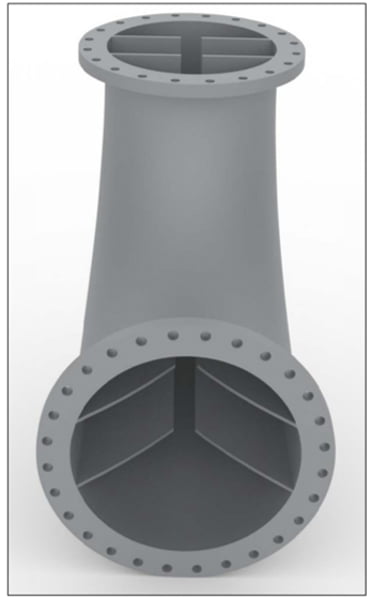
FLOW THROUGH THE BEND
Vaned Elbow — Guiding Flow Through the Bend
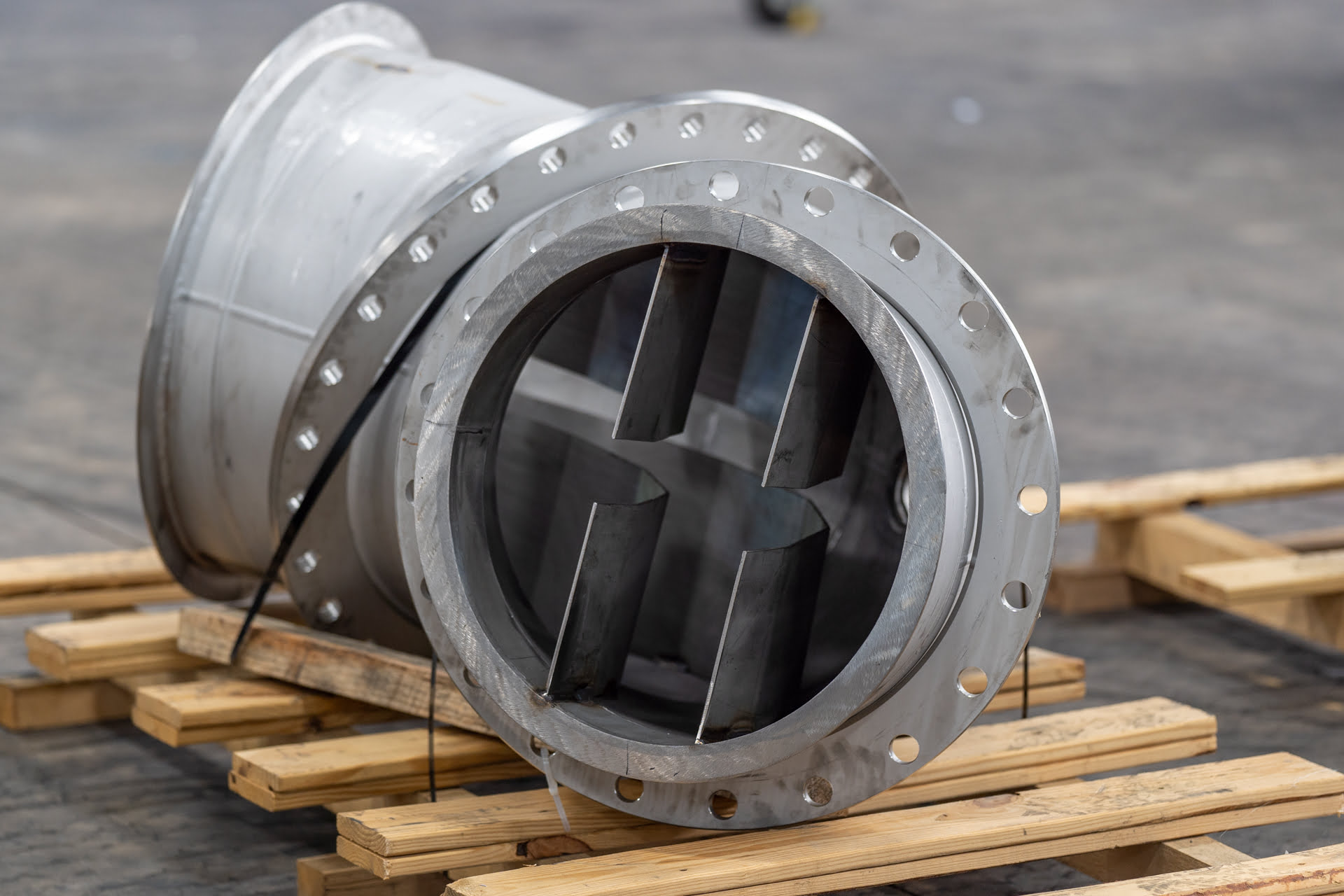
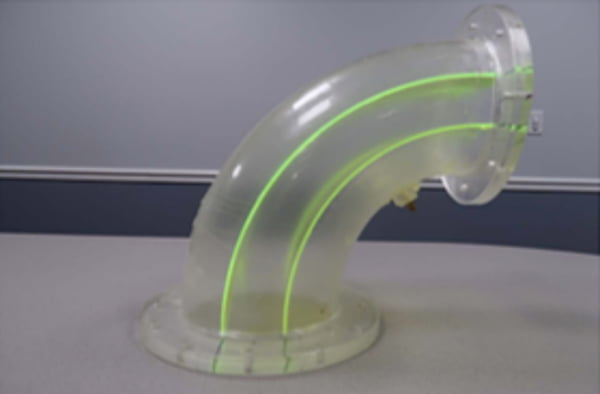
Internal turning vanes guide the liquid around the elbow. This approach can help manage uneven velocity distribution and rotational flow introduced by the bend.
Review vane geometry, elbow radius, any diameter reduction, available space and the connection to the pump.

EXISTING ELBOW REVIEW
Retrofit Option — Grated Elbow Insert
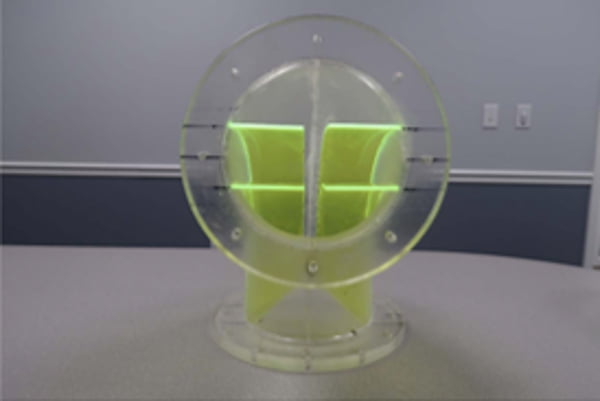
For a suitable clean-water installation, a grate or flow grid may be fitted at the downstream end of the elbow, with the grid extending upstream into the bend.
The exact location, orientation, fit and hydraulic effect require an application review before fabrication or installation.
| Review point | Vaned elbow | Grated elbow insert |
|---|---|---|
| How it works | Turning vanes guide flow through the bend. | A grid conditions flow near the elbow outlet. |
| Installation approach | Evaluate for a new installation or an elbow replacement. | Evaluate as a retrofit to a suitable existing elbow. |
| Liquid and solids | Review the liquid, solids and passage geometry for the specific design. | The elbow-retrofit arrangement discussed here is for clean-water applications; review debris and blockage risks. |
| Hydraulic review | Evaluate the complete suction arrangement, added pressure loss and required NPSH margin. | Evaluate grid head loss and its effect on available NPSH, especially where margin is limited. |
| Information to send | Pump model, flow range, elbow dimensions, suction size and piping drawings. | The same information, plus existing flange details, internal clearances and installation access. |
Keep head loss and NPSH in the same review
Both approaches introduce a component into the suction flow path. Added pressure loss can reduce the net positive suction head available (NPSHA) at the pump. Check that the required NPSH margin is maintained across the intended operating range.
For a grated elbow retrofit, clean-water suitability and potential blockage must be considered alongside the grid’s head loss. When suction margin is already limited, additional loss can increase the risk of cavitation.
Head-loss information: Flow Optimizers does not currently have head-loss data or calculations for this grated elbow retrofit. Determine the proposed insert’s pressure loss and its effect on NPSH for the actual design and operating range.
Read Hydraulic Institute guidance on suction piping, turning vanes and NPSH margin
Technical reference: ANSI/HI 9.6.6-2022 — Rotodynamic Pumps for Pump Piping. Review the proposed flow-conditioning arrangement against the actual pump, piping and project requirements.
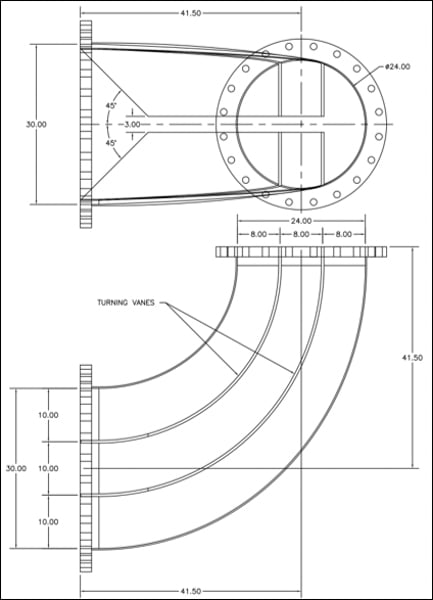
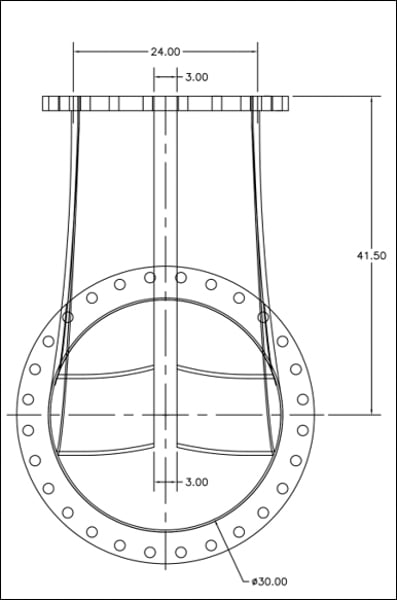
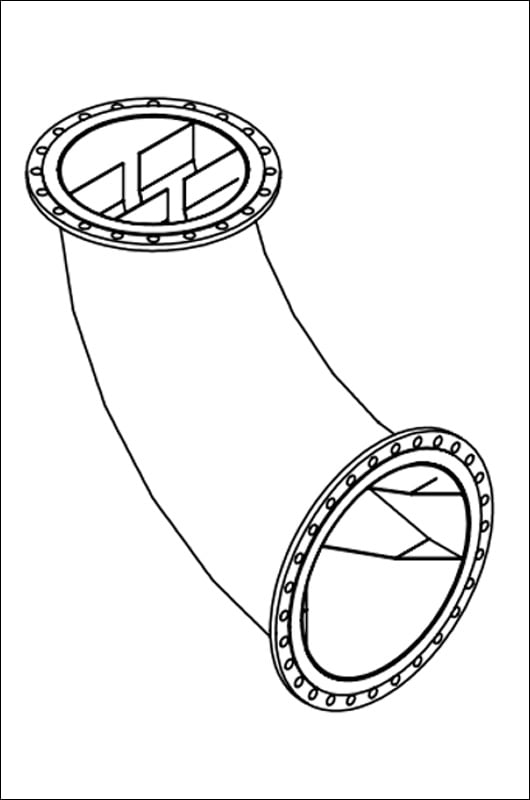
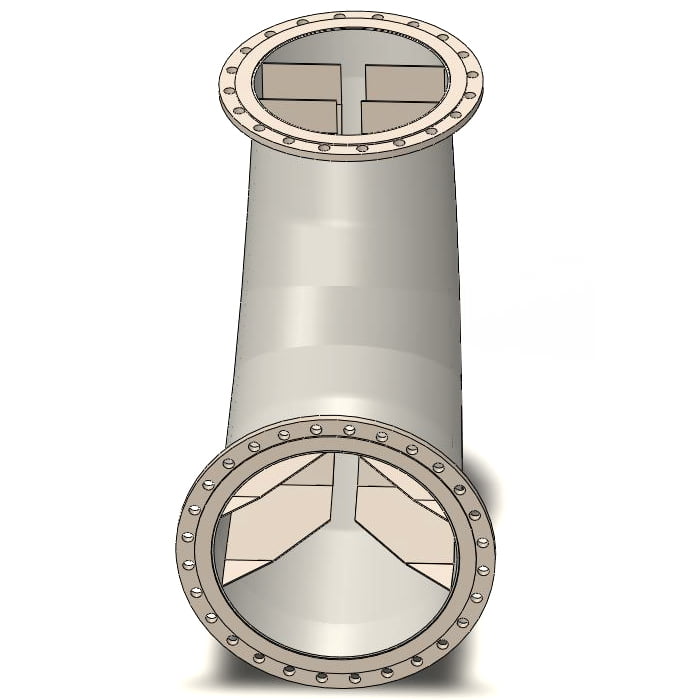
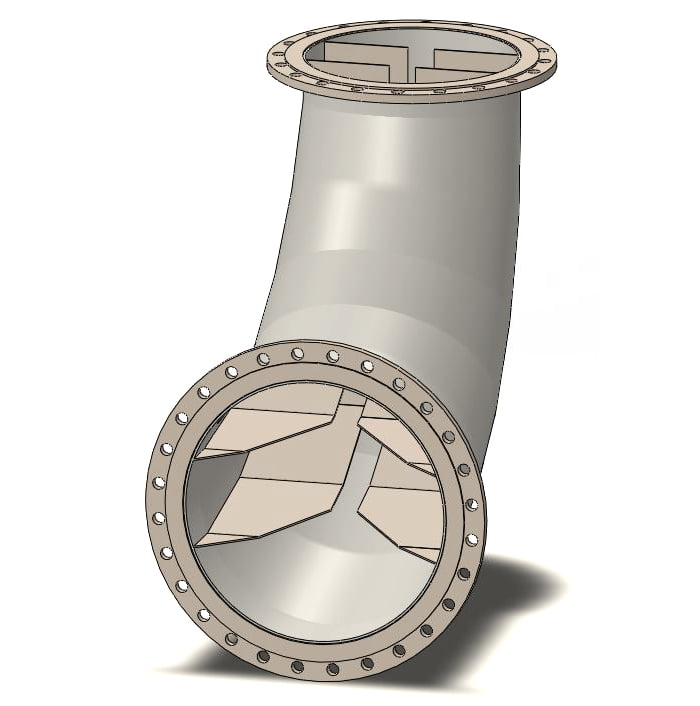
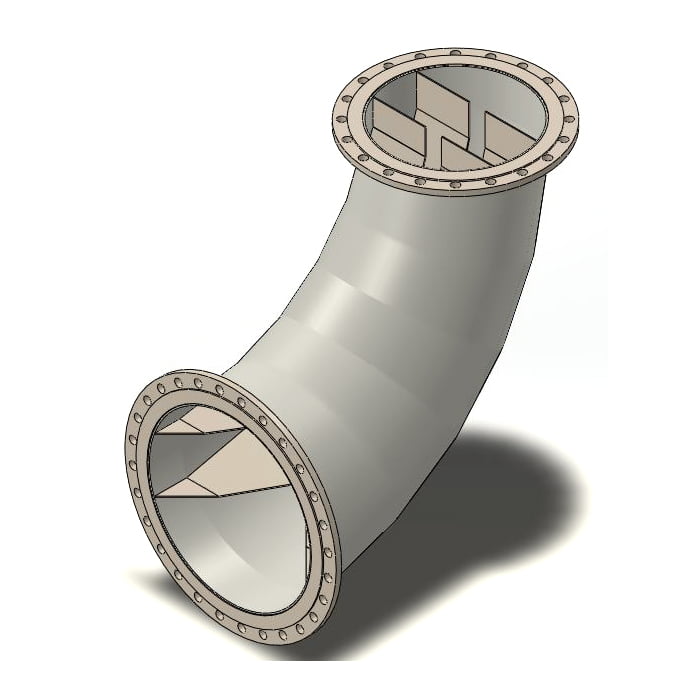
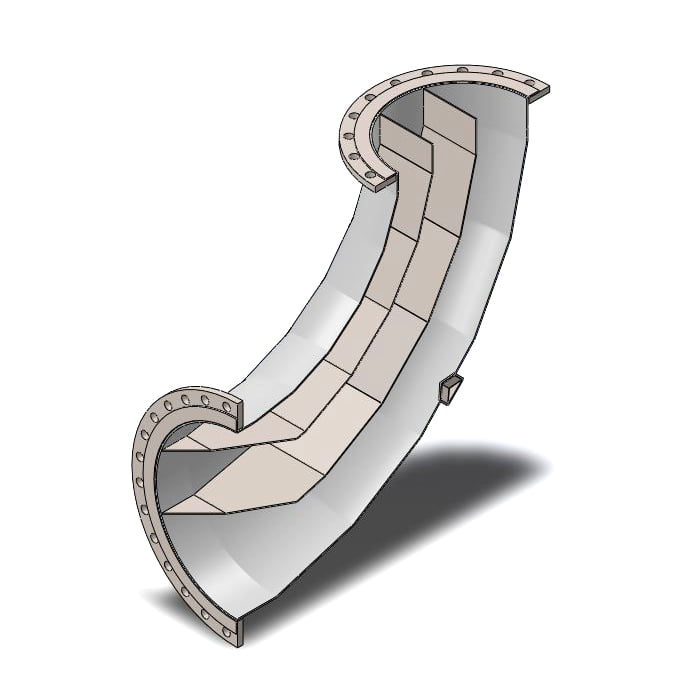
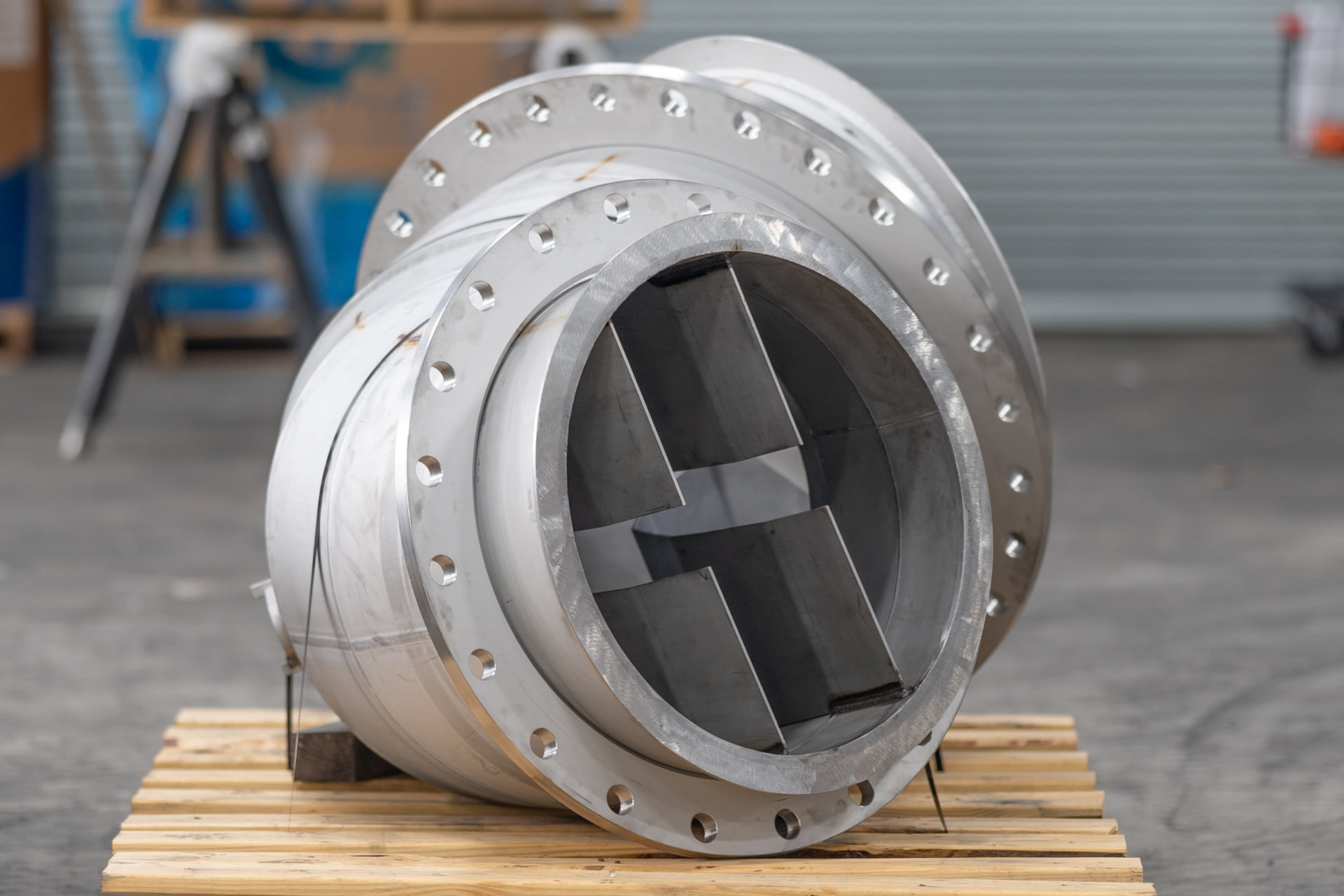
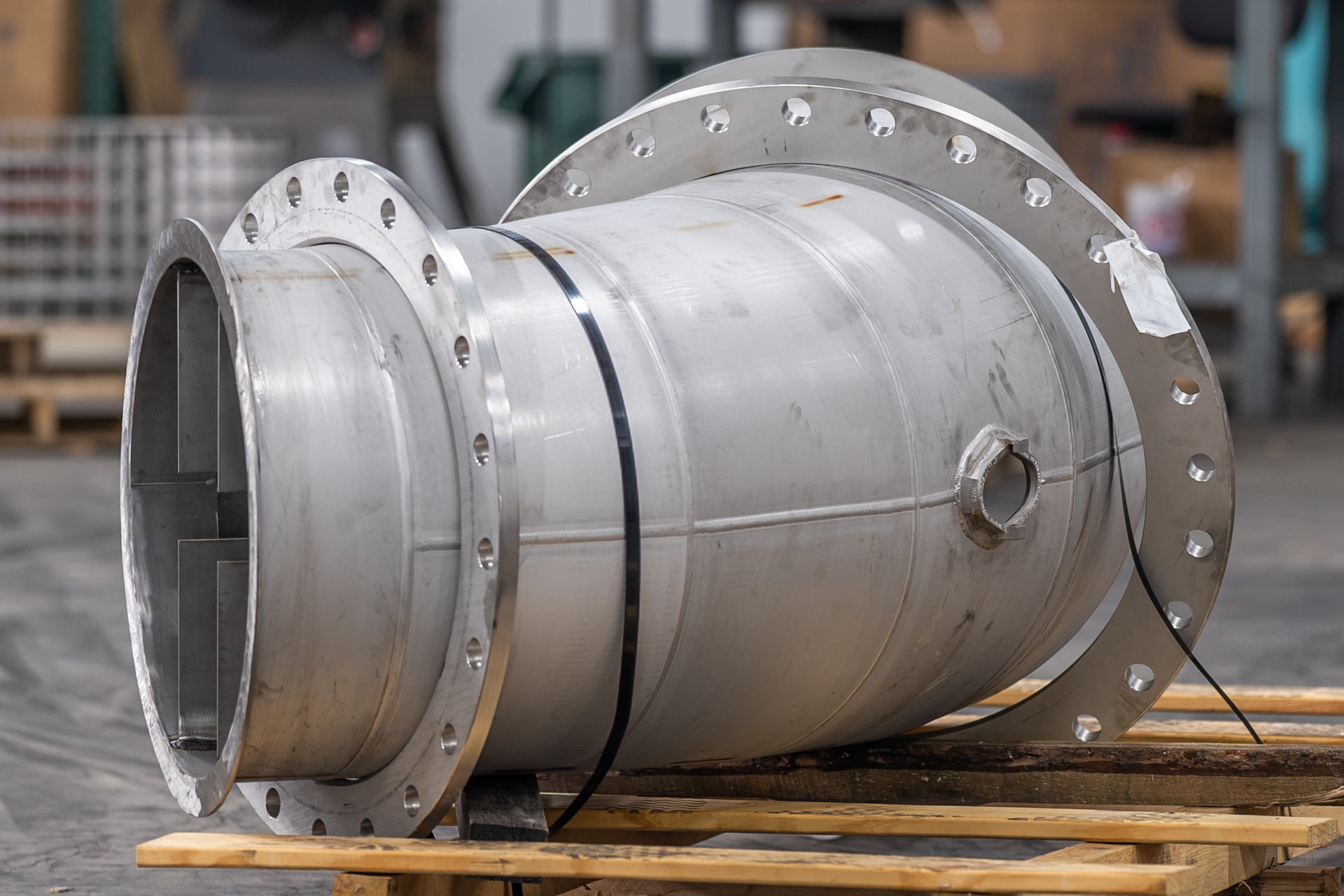
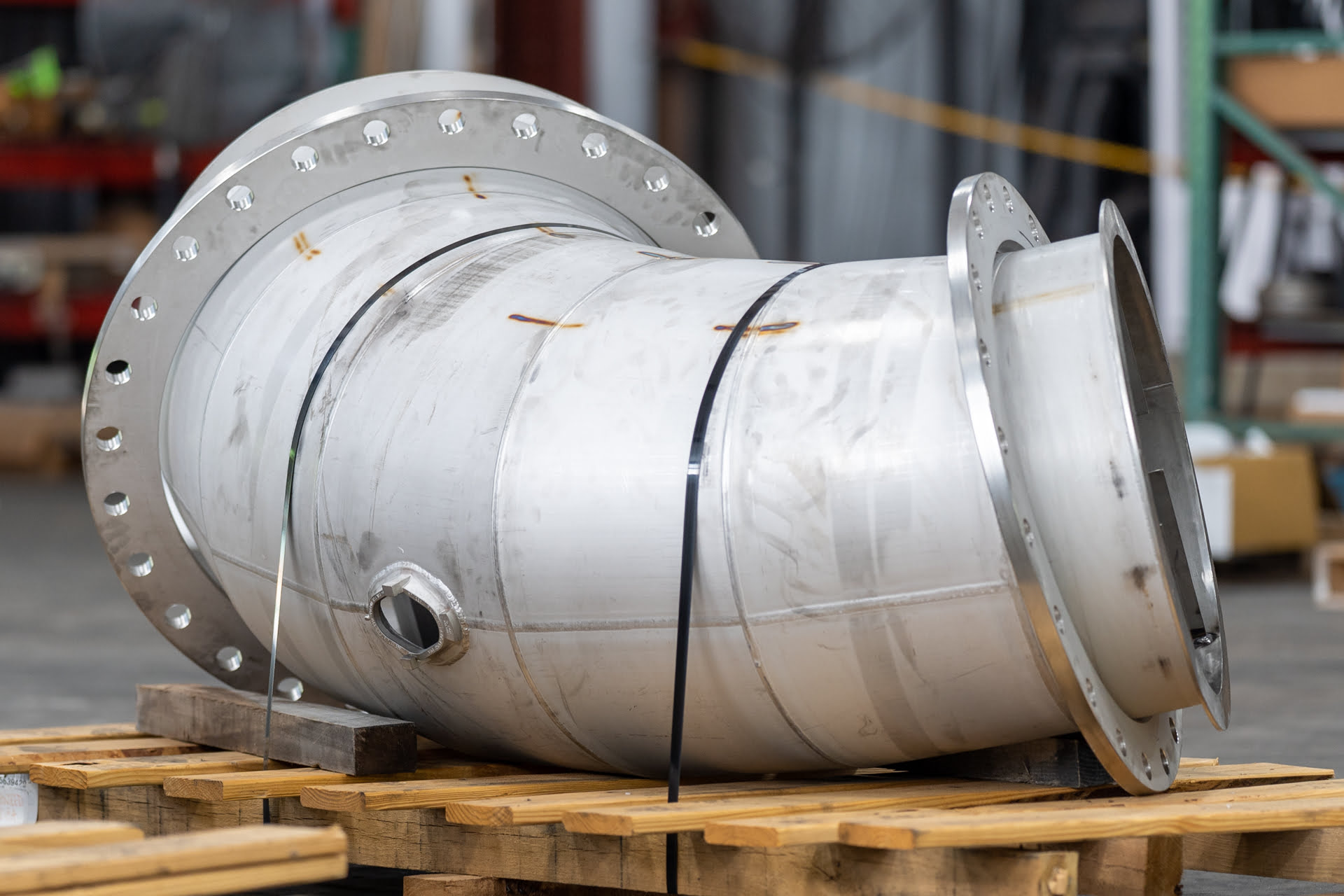
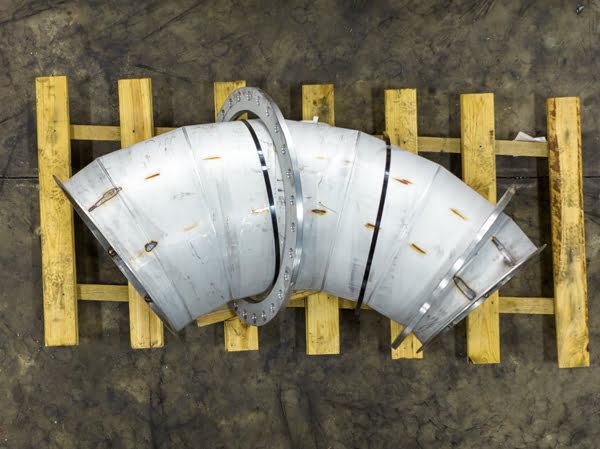
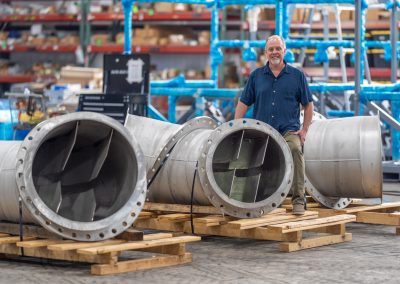
Vaned Reducing Elbows Photos

Hydraulic Modeling
A scaled model is built to simulate and evaluate existing problems in the pump’s intake piping.
Modeling is a fraction of the design and construction cost…where fixing problems after construction is completed may be 10 x the cost of a physical model. Flow Optimizers simply manufactures pump inlet flow conditioners and we strongly recommend Hydraulic Modeling by one of the major laboratories including Clemson Engineering Hydraulics, Alden Research Laboratory, Northwest Hydraulic Consultants, Utah Water Research Laboratory , or the IIHR – Hydroscience & Engineering (University of Iowa).
Benefits of Modeling include:
- Maximize pump performance
- Minimize maintenance and associated costs
- Maximize life of the pumping equipment
- Provides assurance of performance

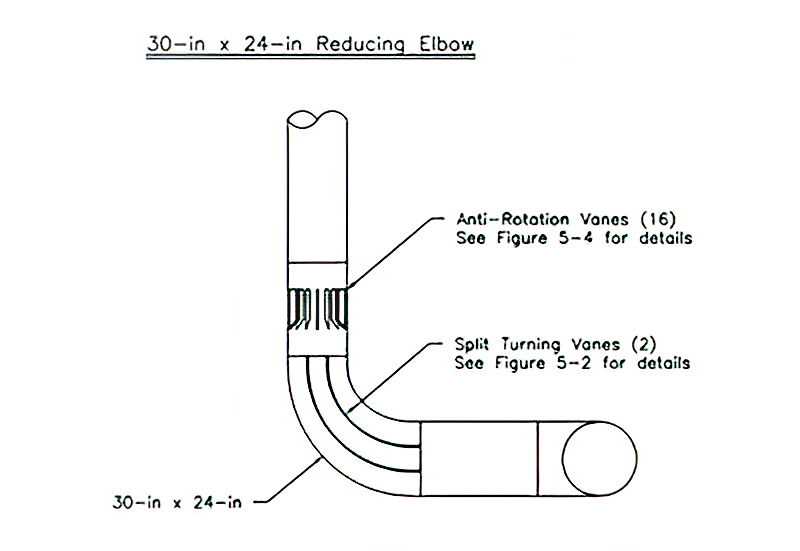

Reducing Elbows
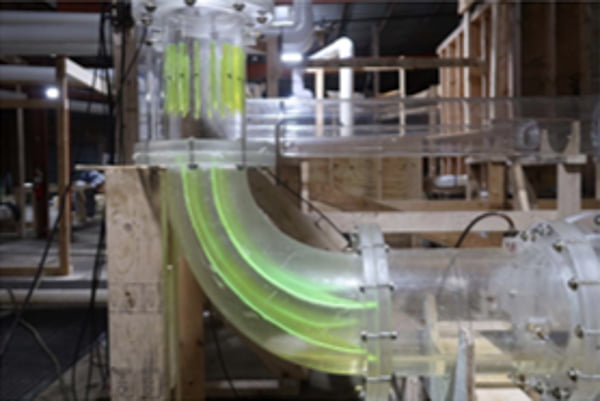
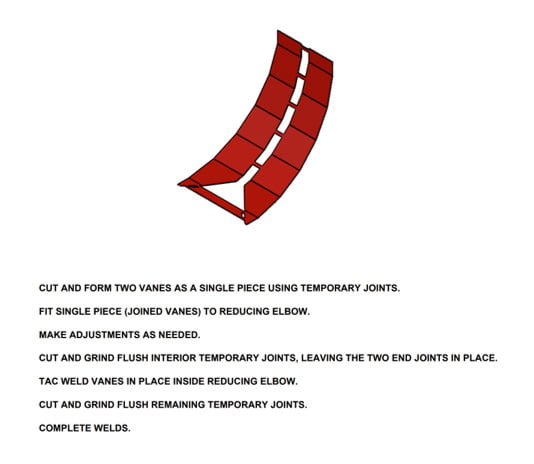
A vaned reducing elbow combines a change in direction with a diameter transition. The reduction ratio, vane arrangement and connection to the pump should be selected for the actual suction-piping and operating conditions.
Short vs. Long Radius Elbows
A long-radius elbow can provide a smoother approach to the pump than a short-radius elbow. Where an elbow is close to the suction nozzle, review radius, orientation, turning vanes and pressure loss together rather than selecting by radius alone.
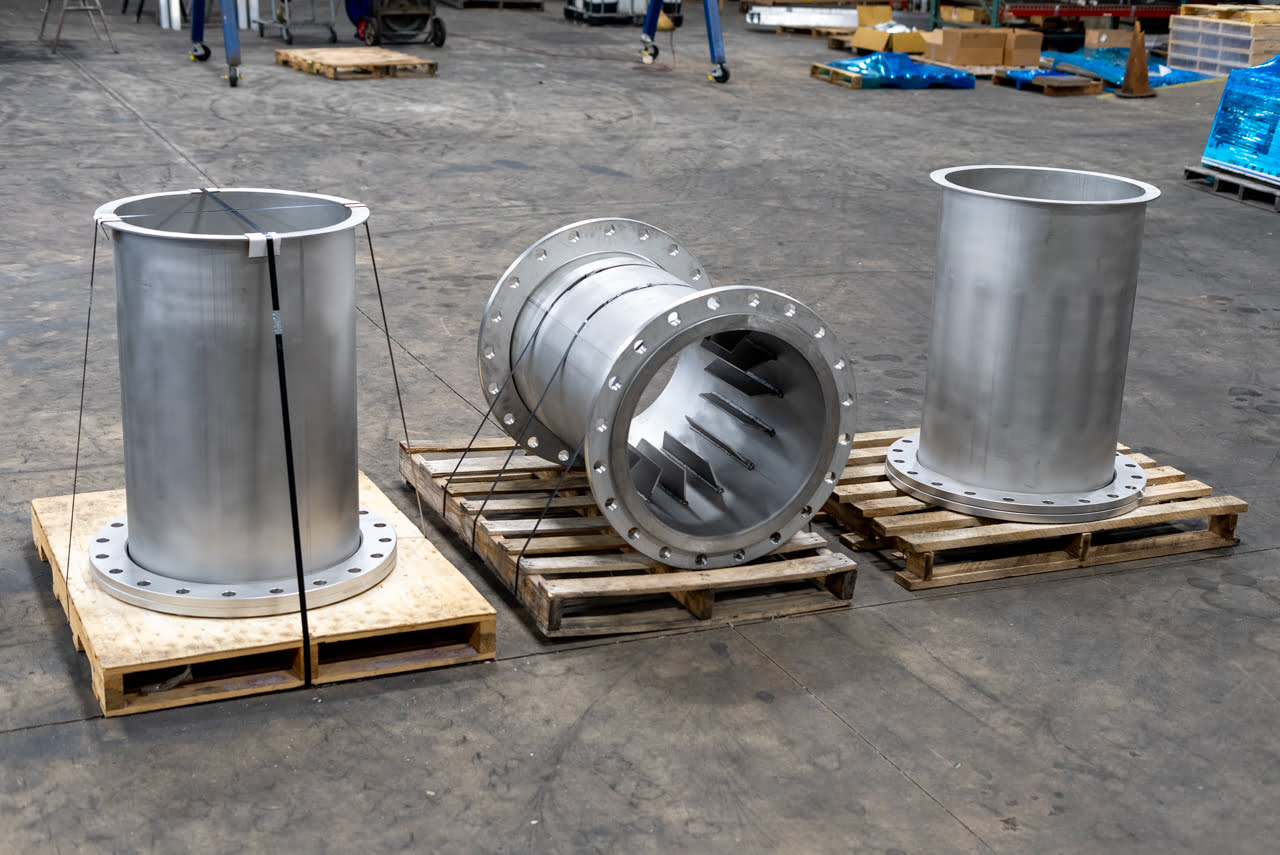
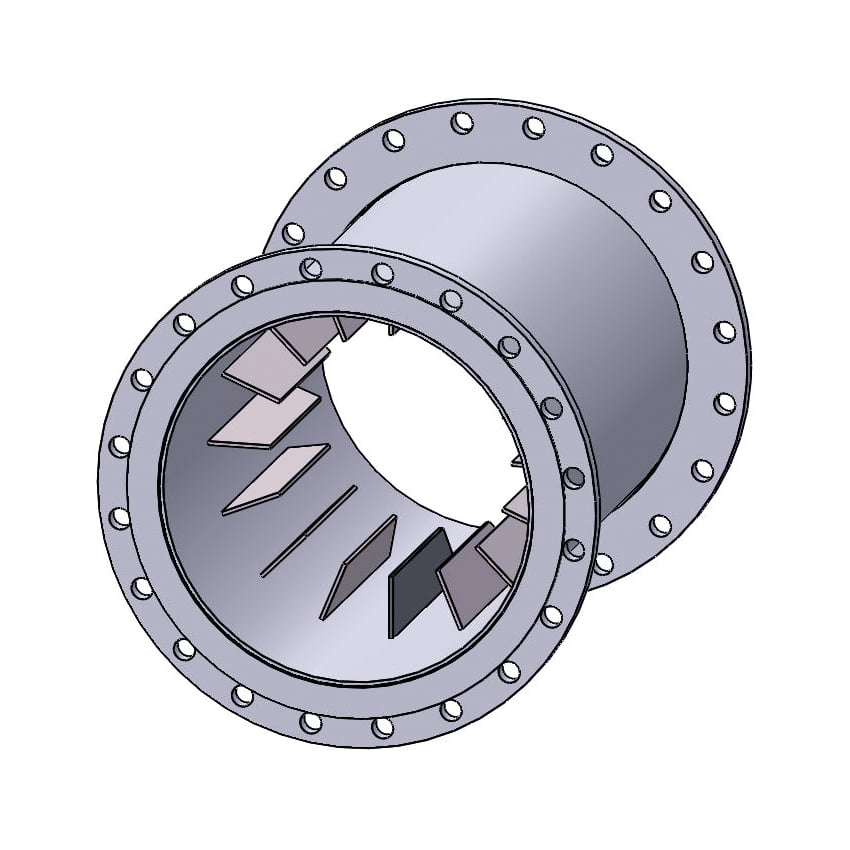
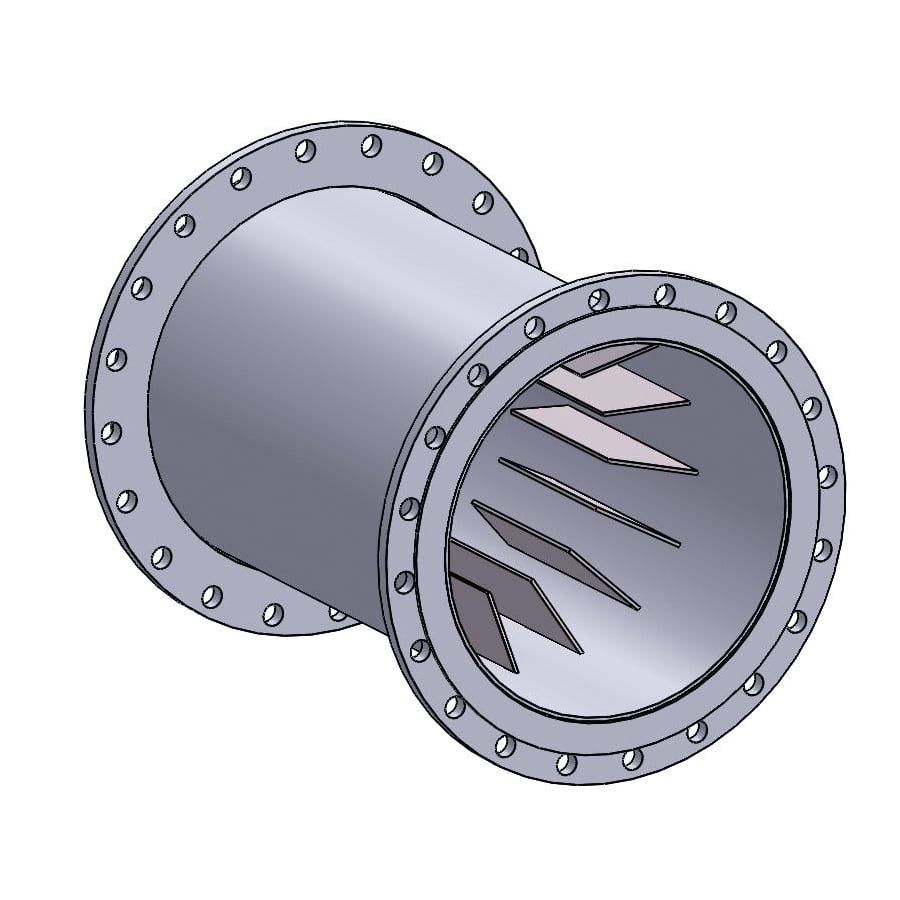
Vaned Spools
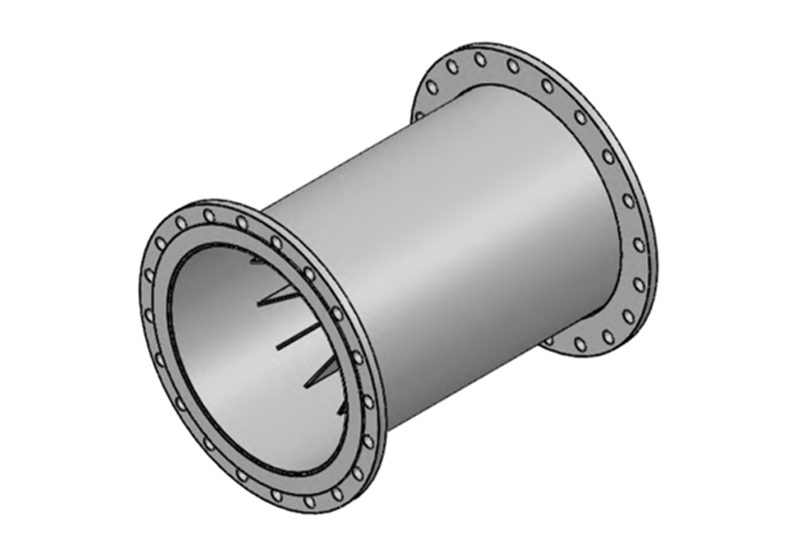
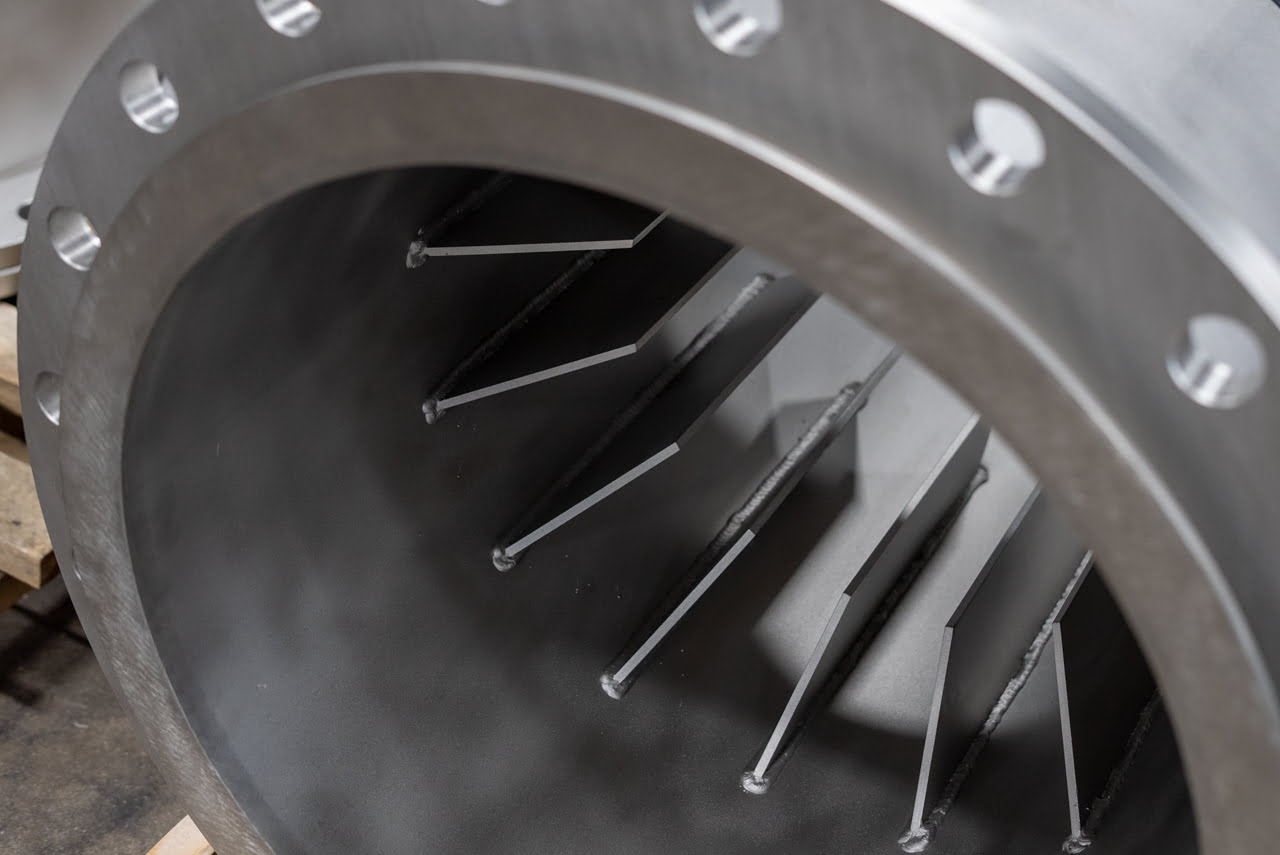
These 24-inch diameter spools are designed to be installed at a sewage treatment plant and utilizes angled vanes to resist clogging.
Also, please see the use of “Van Stone” type flanges to ease in installation since these specially designed flanges rotate to match-up to existing mating flanges.






Contact Us
Contact us for more information or for help with your specific application.
Related Resources
Could either approach fit your pump installation?
Send the information you have so Flow Optimizers can review the application with you:
- Pump manufacturer, model and suction size
- Design flow rate and expected operating range
- Elbow size, radius, dimensions and flange details
- A photo or drawing showing the elbow and surrounding suction piping
- Liquid handled, debris or solids concerns and installation access
- Available NPSH information and the operating concern, if known
The team can identify any additional information needed before recommending a configuration.
Questions about elbow flow conditioning
Is a vaned elbow always the best option?
Selection depends on the full suction arrangement, available space, liquid handled and operating range. Review the installation before choosing an elbow, insert or other approach.
Can I add a grated insert to an existing elbow?
A retrofit may be possible in a suitable clean-water installation. The review should confirm internal dimensions, connections, access, location and orientation, grid head loss and required NPSH margin.
Will flow conditioning solve every pump problem?
Flow conditioning addresses the approach-flow condition. Noise, vibration and performance problems can also have mechanical or other hydraulic causes, so the responsible engineering team should evaluate the complete system.