• Facebook
  • X
  • RSS
Flow Optimizers
  • Home
  • About
    • About Flow Optimizers
    • Capabilities
    • Computational Fluid Dynamics
    • FAQ
    • Partners
    • Specifying Engineers
  • Products
    • Products Overview
    • Flow Conditioning Inserts
      • Vaned Spool
      • Vaned Tee
      • Vaned Cross
      • Vaned Reducing Elbow
      • Vaned Eccentric Reducers
      • Pump Suction Extension Tubes
    • Intake & Basin Optimization
      • Floor Cone
      • Bellmouth
      • Basket
      • Wall Vanes
      • Elevated Corner Fillet
    • Maintenance & Access
      • Handhole Clean-out
      • Handhole Clean-out w/Plug and Vanes
  • Projects
  • Engineering
  • News
  • eBay
  • Contact
Select Page

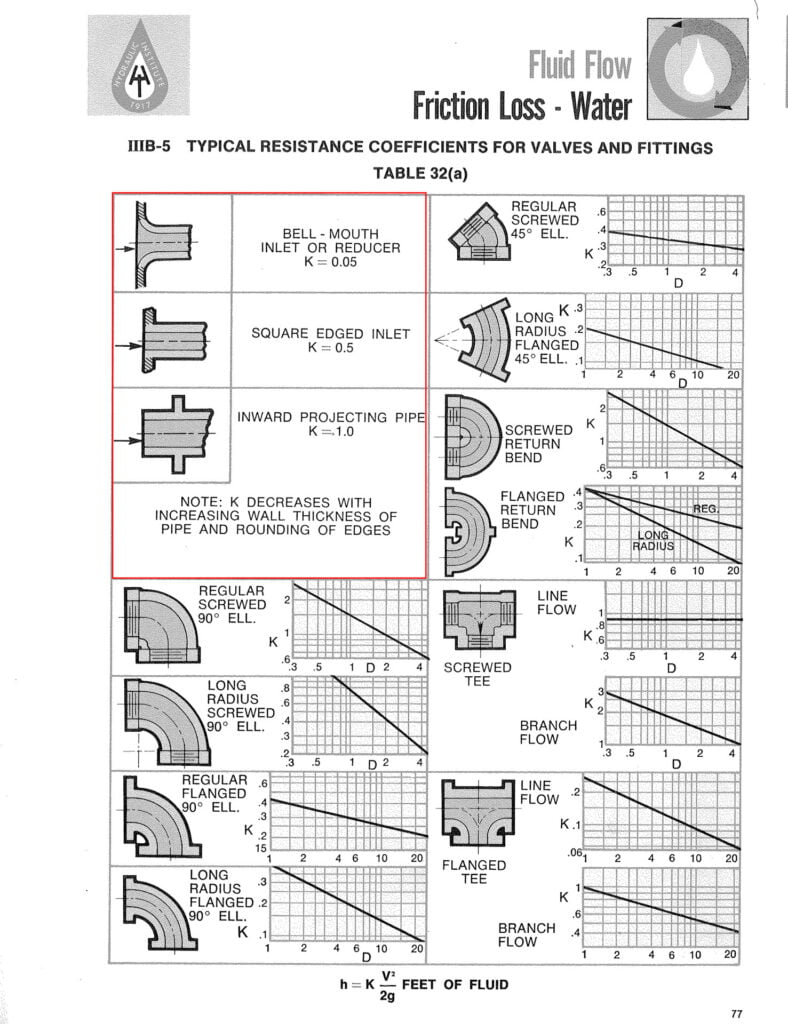
Minor Loss Info (Bellmouth vs Square Edge)

May 9, 2023 | Engineering, Flow Conditioning Bellmouths, Technical Articles, Updates

Minor Loss Info (Bellmouth vs Square Edge)

friction loss - water - bellmouths vs. square edge


Recent Posts

  • Pump Station Retrofit or Modification
  • Understanding Flow Optimizers for Wastewater Treatment Systems
  • Need for Physical Hydraulic Model Study
  • Guide to designing a Vortex Breaker
  • Industry Insight: Four Steps to Pump System Optimization from the Hydraulic Institute

About Flow Optimizers

Flow Optimizers, LLC, a Minority and Woman Owned Business (MWBE), designs and builds inlet flow conditioning products for a wide range of industries, including Power, Oil & Gas, Agriculture, Water & Wastewater, Chemical Processing, Food & Beverage, Pharmaceuticals, Pulp & Paper, and more.
SBA WOSB Certified
  • Flow Optimizer Basket
  • Flow Optimizer Vaned Spool
  • Flow Optimizer Floor Cone
  • Flow Optimizer Vaned Tee
  • Flow Optimizer Vaned Cross
  • Flow Optimizer Vaned Eccentric Reducers
  • Flow Optimizer Bellmouth
  • Flow Optimizer Pump Suction Extension Tubes
  • Flow Optimizer Handhole Clean-out
  • Flow Optimizer Handhole Clean-out w/Plug and Vane
  • Flow Optimizer Vaned Reducing Elbow
  • Flow Optimizer Elevated Corner Fillet
  • Flow Optimizer Wall Vanes
  • Flow Optimizer Vaned Eccentric Reducers
Hydraulic Institute - Proud Member
Made in USA
about flow optimizers, build america buy america seal
  • Facebook
  • X
  • RSS
Copyright ©2025 Flow Optimizers, LLC. All Rights Reserved.
Website Development | Commercial Photos & Videos | Content Marketing

Understanding Minor Losses in Fluid Flow

Minor losses in fluid flow refer to the energy losses that occur due to fittings, valves, and other components within a piping system. These losses can significantly impact the overall efficiency of fluid transport, making it essential for engineers to understand their implications in design and operation.

For instance, the introduction of bends, valves, and fittings can create turbulence and friction, leading to a drop in pressure. Quantifying these losses through empirical data allows for better system design, ensuring that pumps operate within optimal ranges and reducing energy consumption.

Comparison of Bellmouths and Square Edge Fittings

Bellmouths and square edge fittings are two common types of fittings used in fluid systems, each with distinct characteristics affecting flow efficiency. Bellmouths, with their rounded edges, are designed to minimize turbulence and reduce minor losses, making them preferable in applications requiring high efficiency.

In contrast, square edge fittings, while simpler and often less expensive, can introduce significant turbulence at the inlet, leading to higher energy losses. Understanding the differences between these fittings can help engineers select the most suitable option for their specific applications, optimizing overall system performance.

Impact of Fitting Design on Pump Efficiency

The design of fittings plays a crucial role in the efficiency of pump systems. Properly designed fittings can enhance flow characteristics, reduce energy losses, and prolong the life of pumps by minimizing cavitation and wear caused by turbulent flow.

For example, using bellmouth fittings at the pump inlet can lead to smoother flow transitions, reducing the strain on the pump and improving its operational efficiency. Conversely, poorly designed fittings can lead to increased maintenance costs and reduced system reliability over time.

Best Practices for Selecting Fittings in Fluid Systems

Selecting the right fittings for fluid systems is essential for optimizing performance and minimizing energy losses. Engineers should consider factors such as flow rate, fluid type, and system pressure when choosing fittings to ensure compatibility and efficiency.

Additionally, employing computational fluid dynamics (CFD) simulations can aid in visualizing flow patterns and identifying potential issues before installation. By adhering to best practices in fitting selection, engineers can enhance the overall effectiveness of their fluid transport systems.